What Does UTM Stand For? 3 Quick UTM Link Tracking Tips
What Does UTM Stand For in Marketing?
For performance marketing and analytics, the question “What does UTM stand for?” is about so much more than the words behind the abbreviation.
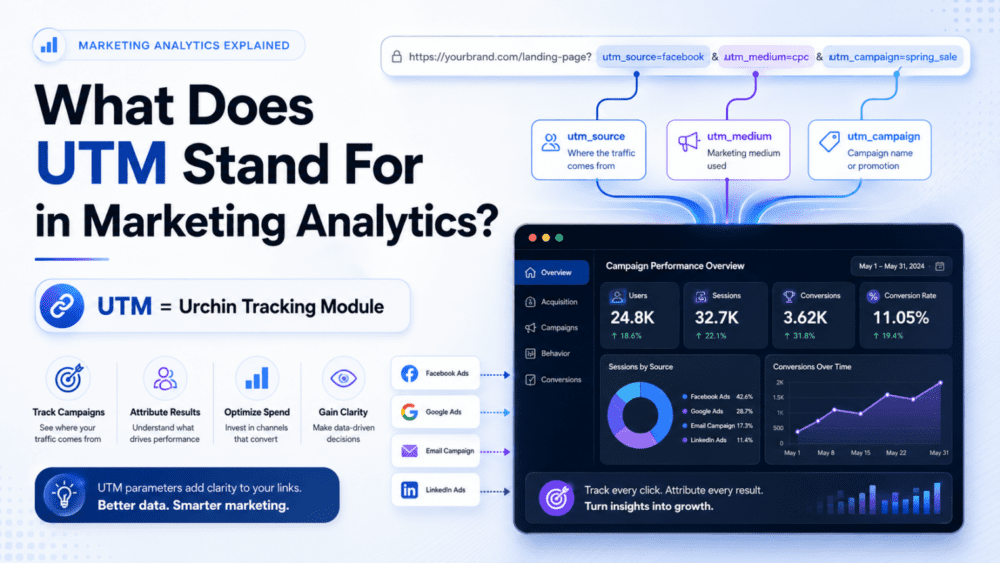
UTM stands for Urchin Tracking Module, an old name from the early days of web analytics.
Urchin was a web analytics platform that Google acquired in 2005, and its tracking approach became part of what marketers now know as UTM parameters through Google Analytics.
That UTM history is useful, but you do not need to memorize it.
Luckily, marketers do not need to worry about the whys and whats of “Urchin” and “Module.” Today, UTM tags are simply tracking labels added to links so tools like Google Analytics can understand where traffic came from.
UTM Made Simple
Instead of worrying about the technical name, think of UTM tags as little labels for your links. They help answer questions like:
Did this website visit come from email, paid search, LinkedIn, a QR code, or a specific campaign?
What Is a UTM Link?
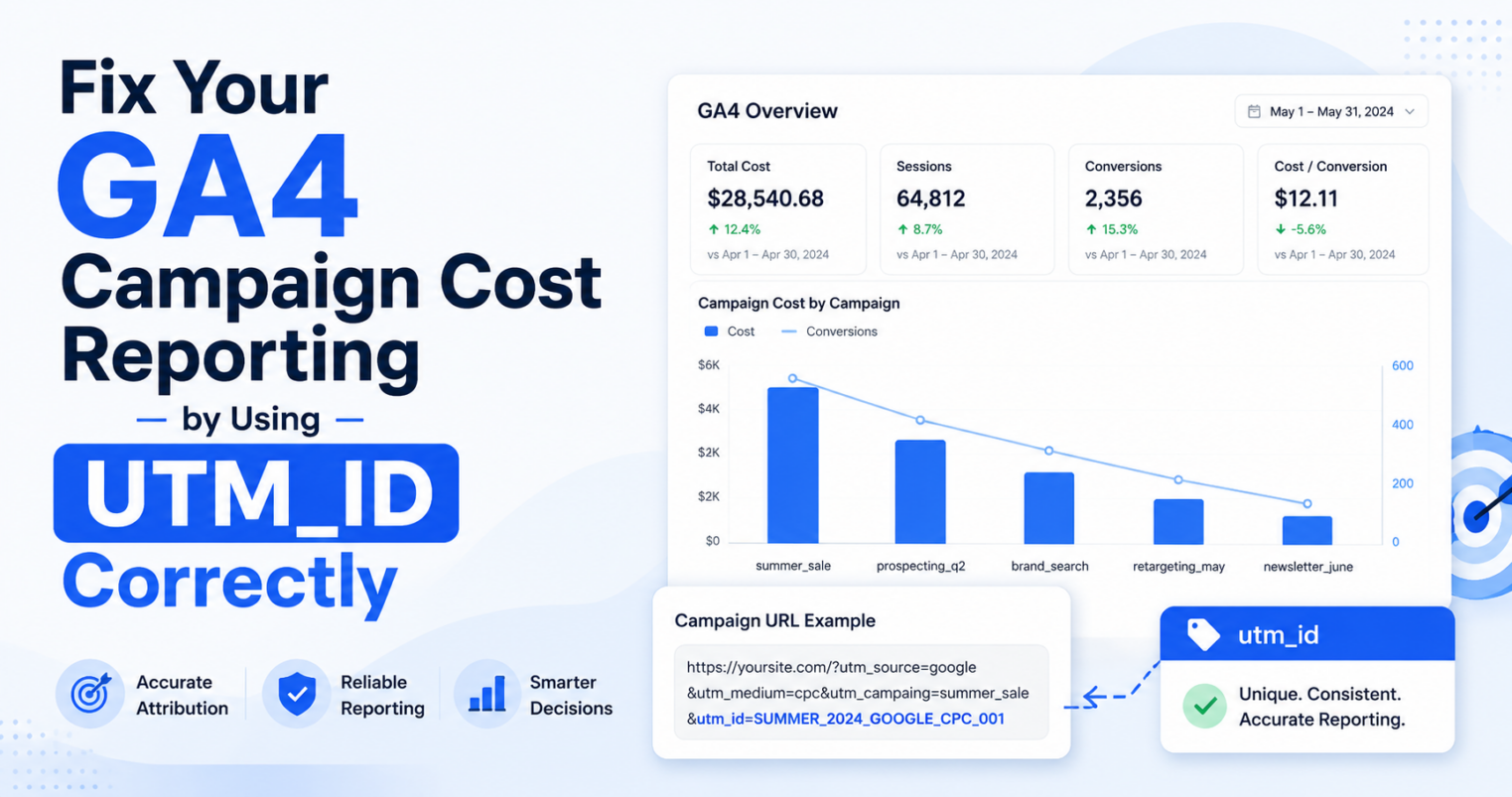
A UTM link is a regular URL with tracking tags added to the end. These tags can show the campaign name, source, medium, content, and keyword tied to a click.
Here is a simple example:
https://example.com/page?utm_source=newsletter&utm_medium=email&utm_campaign=spring_saleIn this example:
- utm_source shows where the traffic came from.
- utm_medium shows the type of channel.
- utm_campaign shows the campaign name.
Why the UTM Approach Will Continue to Be Key for Campaign Reporting
Privacy rules, cookie restrictions, and tracking opt-outs have changed how marketers measure performance. As a result, teams need reliable ways to understand where traffic comes from and which campaigns drive engagement.
UTM links remain one of the clearest ways to answer those questions. They help marketers see which channels, campaigns, ads, emails, QR codes, and social posts are sending people to a website.
Why Our “What Does UTM Stand For?” Training Tips Help
UTM links only work well when teams build them consistently
If one person uses capitalized “Email” and another uses lowercase “email,” reporting becomes split and difficult to track.
That is why UTM training matters.
Our 30-Second Videos Show Easy, Practical Examples
In this quick CampaignTrackly training resource, you will learn about UTM tags through short, easy-to-understand “True or False” videos.
Each 30-second lesson explains a common UTM mistake and shows how to avoid it, helping you strengthen your knowledge of UTM tracking through practical examples.
Training Tip 1: Most Marketers Get UTM Medium and UTM Source Backwards
Video title: Most Marketers Get UTM Medium and UTM Source Backwards – This Easy “Bucket Rule” Is the Fix
Watch: https://youtube.com/shorts/dAryhH6fTa8
Lesson: Medium and source are not the same thing.
What Do UTM Medium and UTM Source Mean?
Think of medium as the traffic bucket. Think of source as the origin inside that bucket.
For example, email can be the medium. Meanwhile, marketo, sfmc, or newsletter can be the source.
When teams mix up source and medium, campaign reports become harder to read. As a result, Google Analytics may group traffic in ways that do not match how your marketing team thinks about performance.
Training Tip 2: One Simple UTM Mistake Can Ruin Your Reports
Video title: One Simple UTM Mistake That’s Ruining Your Reports – True or False?
Watch: https://youtube.com/shorts/8sWIfshhIH4
Lesson: Small UTM mistakes can create big reporting problems.
A missing tag, inconsistent campaign name, unclear source, or mismatched medium can make your reports harder to trust.
For example, if your team uses different naming rules for the same campaign, your analytics platform may treat those values as separate campaigns. Therefore, your results can look fragmented even when the campaign performed well.
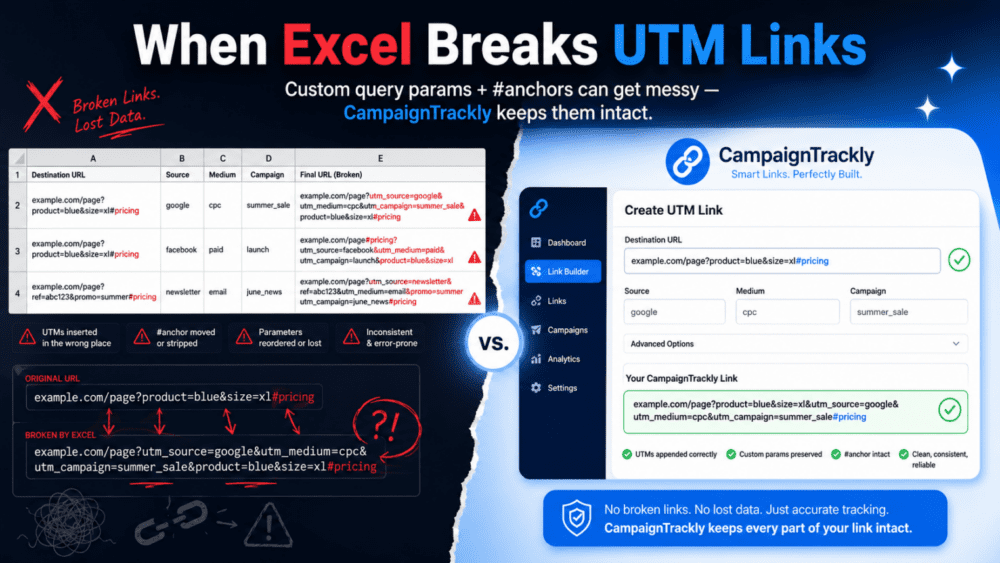
This is why teams should use a UTM parameter builder instead of typing tracking links manually. A governed builder helps reduce errors and keeps campaign data consistent.
Training Tip 3: Does Font Case Matter in UTM Tags?
Video title: Does Font Case Matter in Your UTM Tags?
Watch: https://youtube.com/shorts/bJskUSaUu0w
Lesson: Yes, font case matters in UTM tags.
In analytics tools, newcampaign and Newcampaign may not be treated as the same value. That means inconsistent capitalization can split your campaign data.
This mistake is easy to miss. However, it can create messy reports, duplicate campaign rows, and confusing performance analysis.
To avoid this problem, teams should choose a clear lowercase format for UTM values. They should also use naming conventions and validation rules to keep campaign tracking consistent.
How a UTM Parameter Builder Helps
A UTM parameter builder helps marketers create tracking links without typing every value by hand. This reduces mistakes and makes reporting easier to trust.
A strong URL parameters generator should help teams build consistent campaign links, not just add tags to a URL. It should support clear rules for source, medium, campaign name, content, and term.
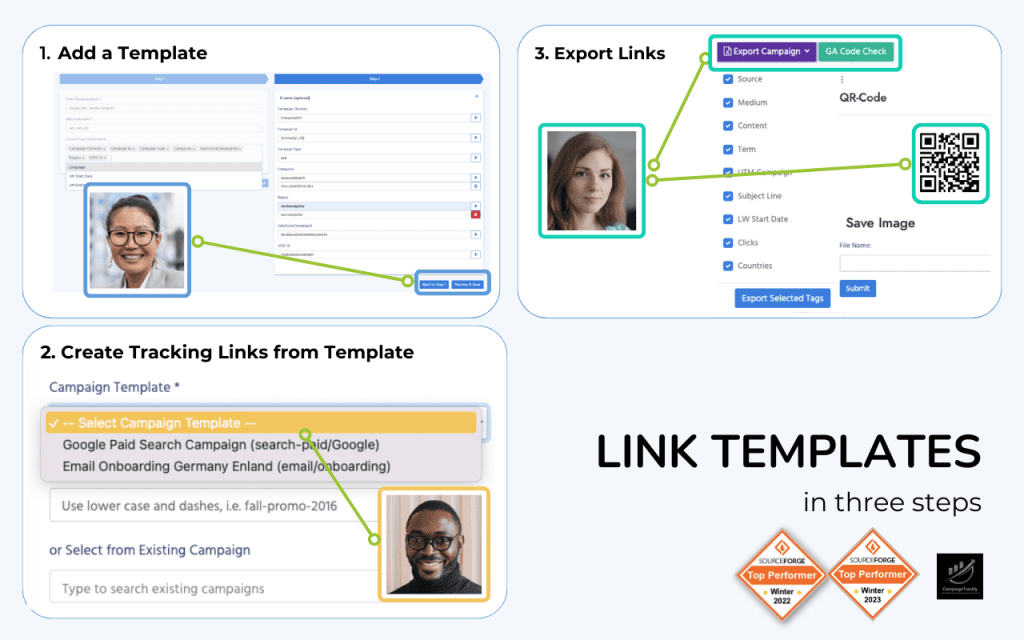
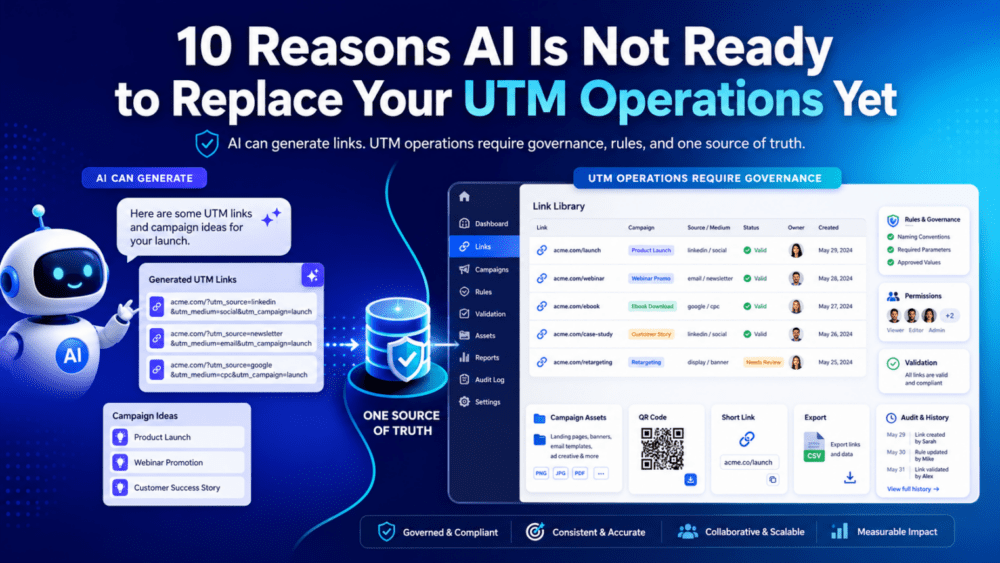
CampaignTrackly goes beyond a basic campaign URL builder for UTM tags. It helps teams create governed UTM links, branded short links, QR codes, smart links, and reporting-ready metadata from one workflow.
What Are Google Tracking Links?
Google tracking links usually refer to campaign links that use UTM parameters for Google Analytics reporting. In practice, they are UTM links built so GA4 can understand the source, medium, campaign, content, or keyword behind a visit.
From UTM Links to Smart Links
Modern campaign links do more than send people to a landing page. They carry tracking data, campaign names, short links, QR codes, source and medium values, and metadata.
That is why smart links matter. A smart link connects the destination URL with the campaign data your team needs for reporting.
CampaignTrackly helps marketing teams create smart links with governed UTM parameters, QR codes, short links, naming conventions, and reporting-ready metadata.
Subscribe for More Campaign Tracking Training
Want more quick lessons like these? Subscribe to the CampaignTrackly YouTube channel for short videos on UTM links, source and medium, QR codes, short links, smart links, GA4 reporting, and cleaner campaign data.
Subscribe to CampaignTrackly on YouTube
CampaignTrackly at a Glance
CampaignTrackly is a G2-recognized campaign data governance and smart link platform. It helps marketing teams create clean, consistent, reporting-ready campaign data.
The platform supports UTM governance, campaign naming conventions, branded short links, QR code automation, smart links, metadata management, workflow integrations, and reporting readiness for GA4, Adobe Analytics, CRM, BI, and marketing automation systems.
Frequently Asked Questions
What does UTM stand for?
UTM stands for Urchin Tracking Module. In marketing, UTM tags are tracking labels added to links so tools like Google Analytics can understand where traffic came from.
What is a UTM link?
A UTM link is a regular URL with tracking tags added to it. These tags can show the source, medium, campaign, content, or keyword connected to a visit.
Why does UTM link tracking matter?
UTM link tracking helps marketers see which campaigns, channels, ads, emails, QR codes, and social posts drive traffic. Clean UTM tracking also makes reports easier to trust.
Does capitalization matter in UTM tags?
Yes. Capitalization can matter because analytics tools may treat values like email and Email as different values. That can split your reporting data.