What Is Google UTM and How Does It Work?
UTM (Urchin Tracking Module) is a simple way to track where your website traffic comes from.
Instead of guessing which campaigns, ads, or posts are driving results, UTM parameters let you add tracking data directly to your links.
When someone clicks a tagged link, tools like Google Analytics 4 (GA4) read those parameters and show you exactly how your campaigns are performing.
How UTM Tracking Works
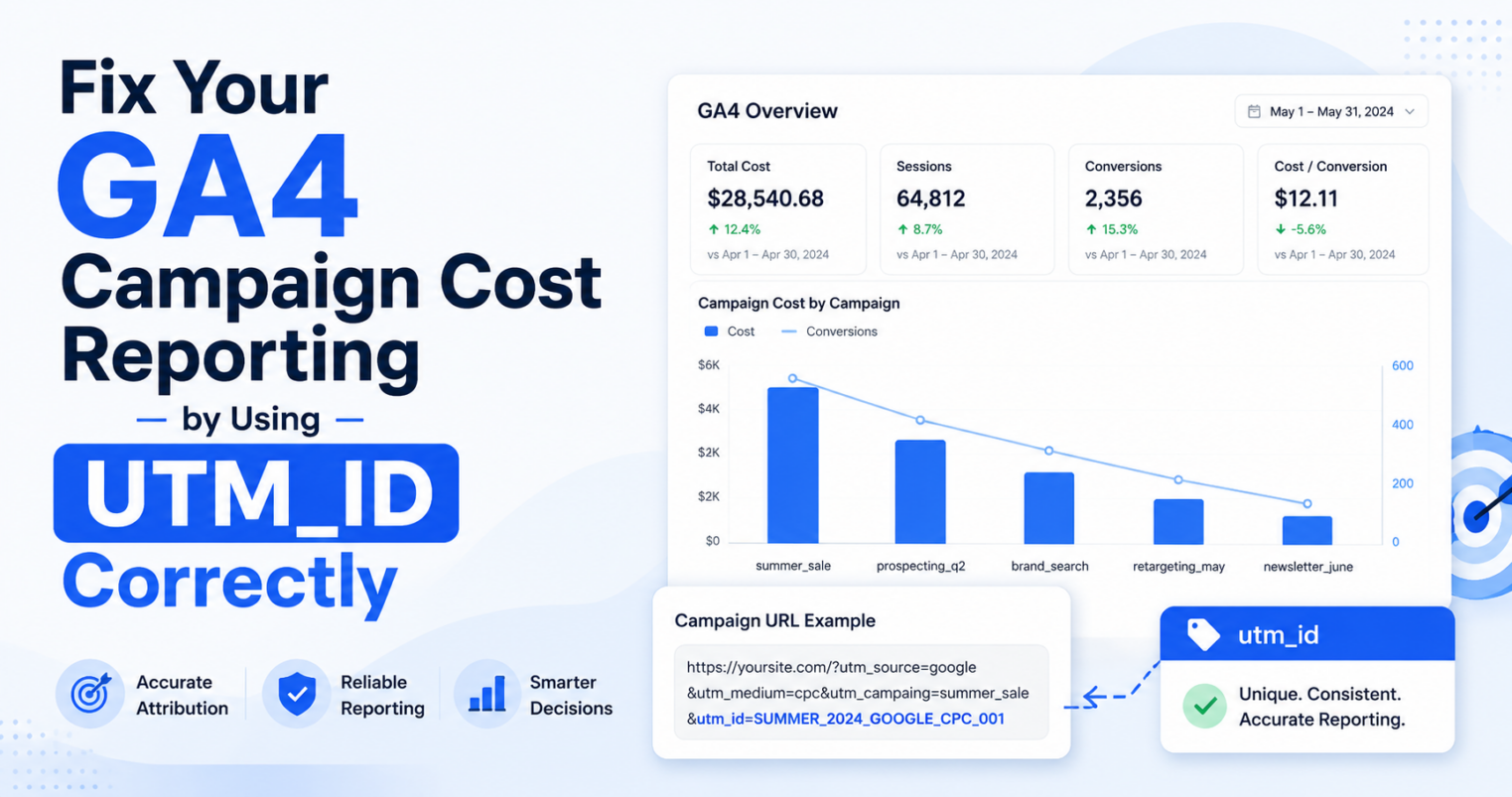
UTM tracking works by adding small pieces of text (called parameters) to the end of your URL.
https://yourwebsite.com?utm_source=linkedin&utm_medium=paid_social&utm_campaign=spring_launchEach parameter tells your analytics platform something important:
utm_source→ where the traffic came from (e.g. LinkedIn, Facebook)utm_medium→ the channel (e.g. email, paid social)utm_campaign→ the campaign name
When users click this link, GA4 captures the data and attributes the visit to your campaign.
—
Why UTM Parameters Matter
Without UTM tracking, your analytics reports often show unclear or incomplete data like “direct” or “unknown.”
With UTMs, you can clearly answer questions like:
- Which campaign drove the most traffic?
- Which channel converted best?
- Which ad or email performed better?
This turns your marketing from guesswork into measurable performance.
—
How Marketers Create UTM Links
Traditionally, marketers used manual tools like the Google Campaign URL Builder or spreadsheets to create tagged links.
These tools help ensure the correct format, but they come with limitations:
- One link at a time
- Manual entry (high risk of errors)
- No standardization across teams
—
Is Your UTM Tracking Safe?
Watch the 40-second video to see how to prevent UTM errors that hide your hard-earned results.
3-Minute UTM QA & Pre-Launch Checklist
Manual vs. Automated UTM Builders
You can create UTM links manually, but it requires precision. A small typo or inconsistency can break your reporting.
Manual builders:
- Good for quick, one-off links
- Limited scalability
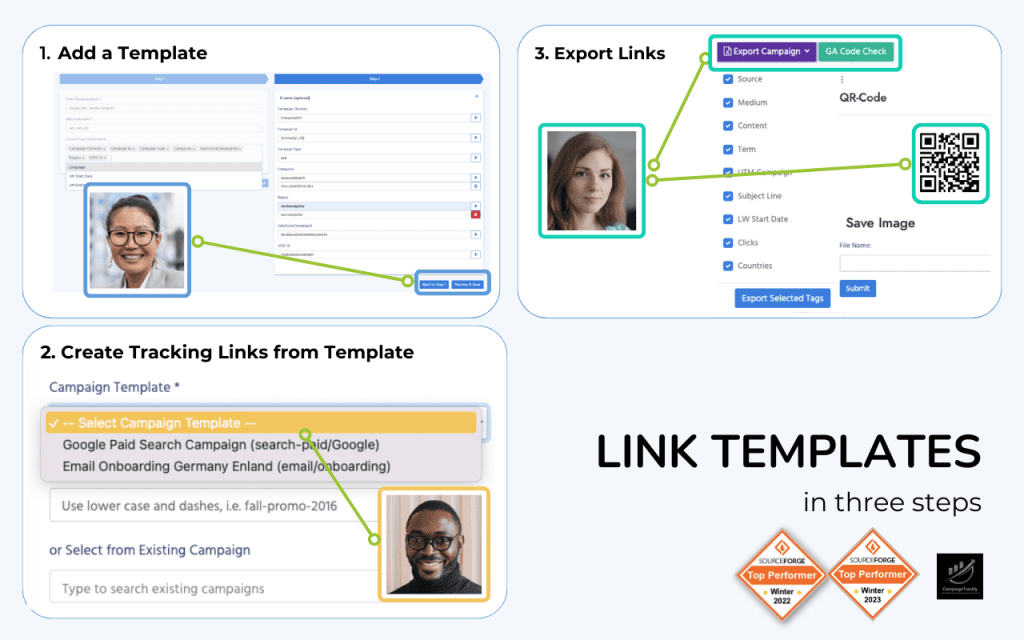
Automated builders (like CampaignTrackly):
- Create multiple links in seconds
- Enforce naming conventions
- Reduce human error
- Integrate with tools like GA4, Adobe, and CRM systems
—
Why Manual UTM Tracking Breaks at Scale
As your marketing grows, managing UTMs manually becomes difficult.
For example, if you’re promoting one campaign across multiple channels, you may need dozens of unique links.
Without a system, you end up with:
- Inconsistent naming (e.g. spring_sale vs SpringSale)
- Duplicate campaigns
- Fragmented reporting
This makes it harder to trust your analytics.
—
From UTM Tags to Campaign Tracking Systems
Modern marketing teams go beyond basic UTM tagging.
They use structured systems that include:
- Standardized naming conventions
- Predefined templates
- Centralized governance
- Automation and integrations
This ensures that campaign data is clean, consistent, and ready for reporting and analysis.
—
Start Tracking Your Campaigns the Right Way
If you’re just getting started, begin with a simple campaign URL builder to generate your links.
If you’re managing campaigns across teams or channels, consider using a structured solution that standardizes your tracking and eliminates errors.
Want to go deeper? Explore our UTM tracking tutorials to learn how to build a scalable campaign tracking system.
How CampaignTrackly Automatically Fixes URL String Fragments
Instead of relying on rigid, error-prone spreadsheet formulas, CampaignTrackly’s intelligent parsing engine automatically detects page hashtags, dynamically isolates them, sequences your UTM parameters using the correct syntax separators, and safely re-attaches the anchor to ensure flawless user navigation and 100% accurate analytics.
Frequently Asked Questions
What is UTM tracking?
UTM tracking is a method of adding parameters to URLs so you can measure where your website traffic comes from. These parameters are read by analytics tools like Google Analytics 4 to track campaign performance.
What does UTM stand for?
UTM stands for Urchin Tracking Module, a term that originated from the Urchin analytics software acquired by Google, which later became Google Analytics.
What are UTM parameters?
UTM parameters are tags added to the end of a URL, such as utm_source, utm_medium, and utm_campaign. They provide information about traffic sources and marketing campaigns.
How does UTM tracking work in GA4?
When a user clicks a link with UTM parameters/utm-parameters/, GA4 captures the values and attributes the session to the specified source, medium, and campaign. This data is available in acquisition reports.
Do I need a GA4 UTM builder?
You can create UTM links manually, but using a UTM builder helps ensure accuracy, consistency, and proper formatting, especially when managing multiple campaigns.
Why is UTM tracking important?
UTM tracking helps marketers understand which campaigns and channels drive traffic, engagement, and conversions. Without it, analytics data can be incomplete or misleading.
What is the difference between source, medium, and campaign?
utm_source identifies where traffic comes from, utm_medium defines the marketing channel, and utm_campaign groups related marketing efforts under a single campaign name.